
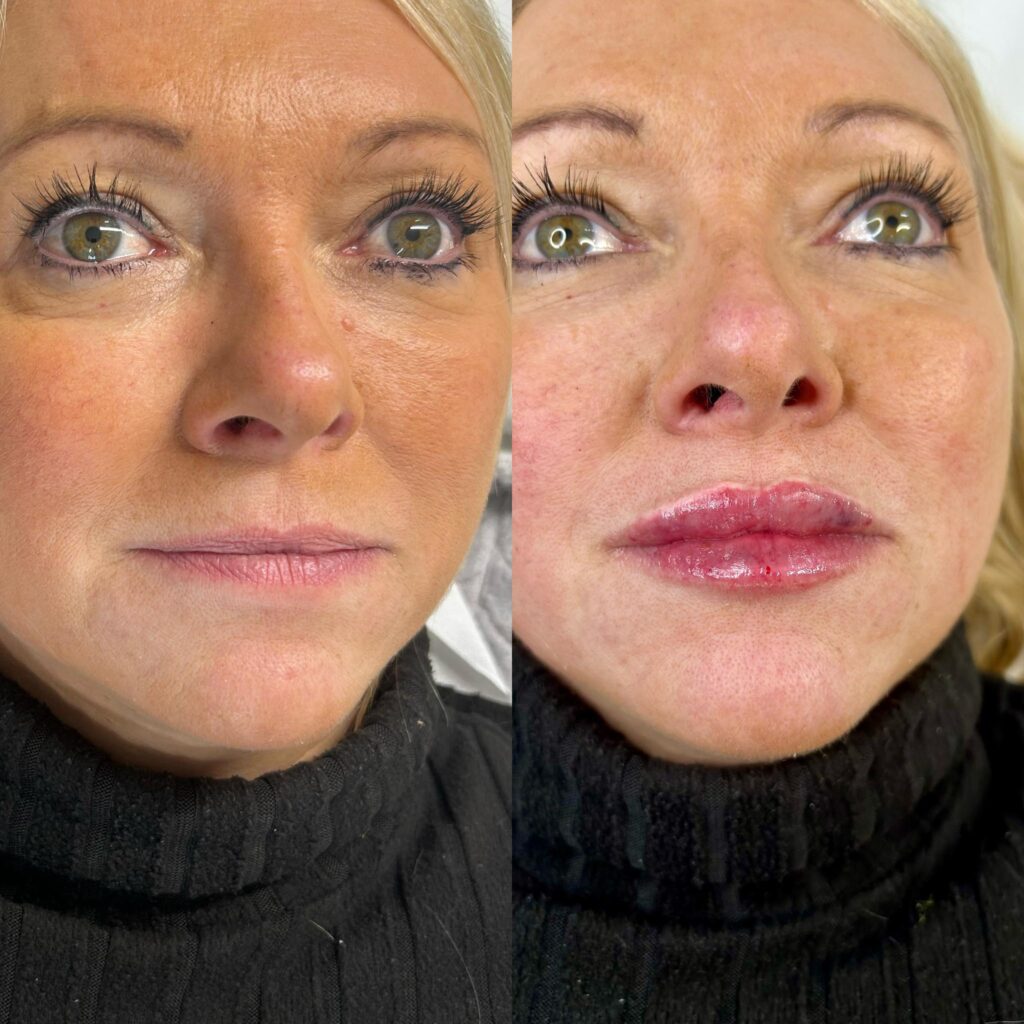
Complete Purple Bruising After Lip Fillers (Day-by-Day Breakdown)
Day 0–1: Redness and Swelling
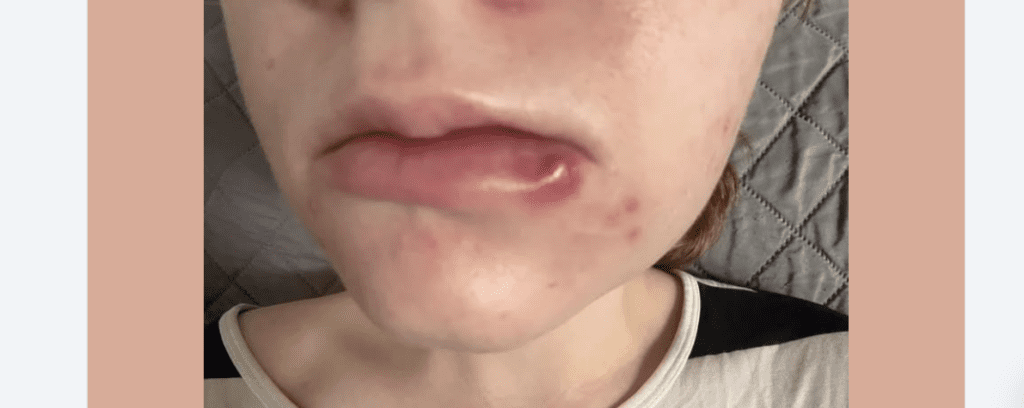
Immediately after injections, lips appear swollen, pink, and possibly slightly red. Small pinpoint bleeding spots may be visible at injection sites. This is inflammatory hyperemia—an increase in blood flow due to tissue trauma.
Swelling peaks during the first 24–48 hours. Many patients mistakenly believe this is their final result, but true shape assessment should wait until swelling resolves.
A detailed recovery overview can be found here:
https://lipfillerresults.site/lip-filler-healing-process-day-by-day-2026/
Day 1–2: Dark Purple Development
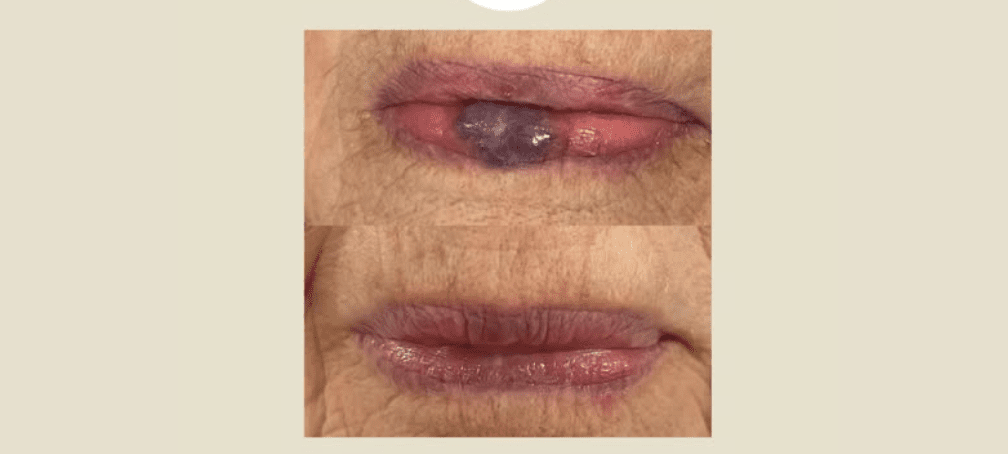
As blood loses oxygen, bruises deepen into dark purple patches. This stage can look dramatic, especially along the vermilion border.
Pain during this stage should be mild and improving—not worsening. Skin should feel warm but not cold.
Day 3–4: Blue or Nearly Black Appearance
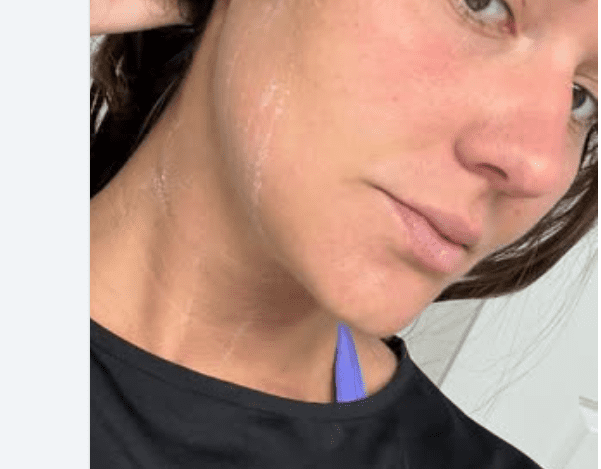
This is often the most alarming phase visually. Oxygen depletion is complete, and pigment density peaks.
Important distinction: Blue or dark purple is normal. Pale white or grey skin is not.
If discoloration appears blotchy, extremely pale, or accompanied by severe pain, evaluation is required.
Critical Section: Vascular Occlusion vs Normal Bruise
Although rare (estimated under 0.1%), vascular occlusion is the most serious filler complication.
The American Society of Plastic Surgeons describes vascular occlusion as blockage of arterial blood supply by filler material.
Key differences:
Normal Bruise:
- Improves daily
- Color shifts predictably
- Mild tenderness
- Skin temperature normal
Vascular Occlusion:
- Severe escalating pain
- White, pale, or mottled discoloration
- Skin feels cold
- Delayed capillary refill (>3 seconds)
- Possible blistering
Immediate hyaluronidase injection is required to dissolve the hyaluronic acid and restore circulation.
Day 5–7: Green Phase (Biliverdin Formation)

When macrophages metabolize hemoglobin into biliverdin, lips may appear green. This stage signals active immune clearance.
Swelling typically reduces significantly during this phase. Any increasing swelling after day 4 may indicate infection rather than bruising.
Day 8–10: Yellow Stage
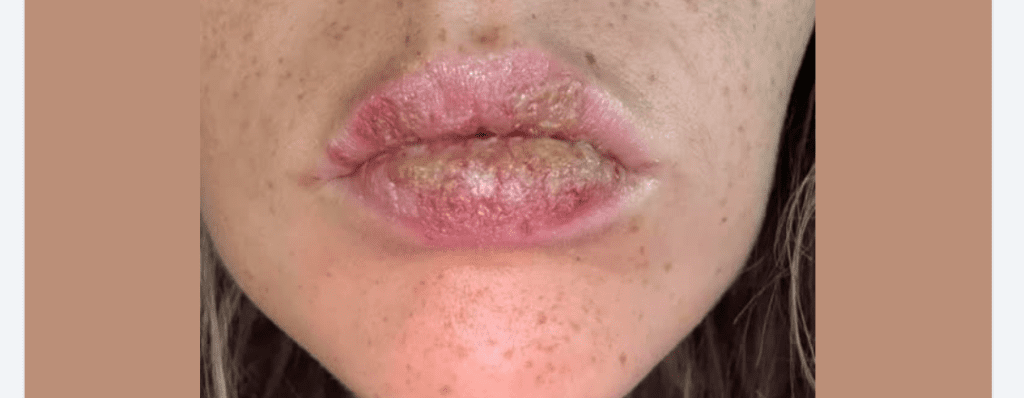
Bilirubin formation produces yellow tones. Bruise size shrinks and pigment disperses.
Patients often notice discoloration moving downward toward the chin. This is gravity acting on breakdown products and is completely normal.
Day 11–14: Brown to Clear

Hemosiderin remnants fade. Lips return to natural color.
Final lip shape becomes accurately visible. Shape goals can vary depending on technique, as explained here:
https://lipfillerresults.site/lip-filler-shape-guide/
Quick Medical Summary
Purple bruising after lip fillers is medically known as post-injection ecchymosis. It affects approximately 60–80% of patients undergoing hyaluronic acid lip augmentation. In most cases, discoloration progresses through predictable color stages—red, purple, blue, green, yellow, and finally clear—over 7 to 14 days. Severe pain, white or grey discoloration, cold skin, or delayed capillary refill may signal vascular occlusion and require immediate treatment.
Why Lips Bruise More Than Other Areas of the Face
The lips are one of the most vascular structures in the entire face. They are supplied primarily by the superior and inferior labial arteries, which branch from the facial artery. These vessels form a dense capillary network directly beneath extremely thin mucocutaneous tissue.
Unlike cheek or chin skin, lip epithelium is only 3–5 cell layers thick. Because of this thinness, even minimal blood leakage appears dark and dramatic. A bruise on the arm may look mild, but the same volume of blood in the lip appears intensely purple.
According to safety guidance from the U.S. Food and Drug Administration, temporary swelling and bruising are expected outcomes of dermal filler procedures. Similarly, complication reviews indexed in the National Center for Biotechnology Information confirm bruising as the most common non-serious side effect of hyaluronic acid fillers.
What Actually Happens Under the Skin: The Biochemical Process
When a needle or cannula enters the lip tissue, it can nick microscopic capillaries. Blood escapes into the interstitial space and becomes trapped beneath the skin.
Immediately after leakage, oxygen-rich hemoglobin appears bright red. However, once cut off from circulation, hemoglobin rapidly becomes deoxygenated, shifting to dark purple or blue.
Over the next several days, macrophages—specialized immune cells—break down hemoglobin into different pigments:
This pigment cascade explains why bruises change color. The green stage in particular is often misunderstood. Many patients worry when their lips turn green, but this is actually a sign that healing is progressing normally.
- Hemoglobin → Purple/Blue
- Biliverdin → Green
- Bilirubin → Yellow
- Hemosiderin → Brown
Lesser-Known Factors That Influence Bruising Severity
1. Injection Technique (Needle vs Cannula)
Needles are sharper and more precise but more likely to puncture capillaries. Cannulas are blunt-tipped and may reduce vascular trauma.
Certain techniques, like Russian tenting methods, involve multiple vertical punctures, increasing bruise probability:
https://lipfillerresults.site/different-style-russian-lip-fillers/
2. Volume Injected
Larger volumes stretch tissue more aggressively. Starting conservatively (0.5ml) may reduce trauma:
https://lipfillerresults.site/how-much-is-half-a-syringe-of-lip-filler/
3. Hormonal Cycle
A lesser-known factor: bruising risk increases during menstruation due to temporary changes in platelet function and capillary fragility. Scheduling injections mid-cycle may reduce severity.
4. Smoking & Nicotine
Nicotine causes vasoconstriction, which paradoxically may reduce immediate bruising but increases delayed healing complications. It also increases necrosis risk if vascular compromise occurs.
Avoid smoking at least 72 hours post-procedure.
5. HSV-1 Reactivation
Lip trauma can reactivate herpes simplex virus. Early tingling may be mistaken for bruising. Antiviral prophylaxis is recommended for patients with history of cold sores.
Infection vs Bruise: How to Tell
Bruise:
- Color progression
- No fever
- Pain decreases
- Predictable fading
Infection:
- Increasing redness
- Warm expanding area
- Fever
- Pus
- Worsening swelling after day 3
Infection rate remains below 1% in sterile medical settings.
The Tyndall Effect: Blue Without Bruising
If filler is placed too superficially, light scattering creates a blue tint. Unlike bruising, Tyndall effect:
- Does not change colors
- Does not hurt
- Persists beyond 2 weeks
It is harmless and correctable with hyaluronidase.
Advanced Insight: Why Some People Bruise More Than Others
Emerging aesthetic research suggests genetic differences in collagen density and capillary wall thickness influence bruising severity.
Patients with:
- Ehlers-Danlos traits
- Vitamin C deficiency
- Platelet dysfunction
- Chronic NSAID use
may bruise more dramatically.
Hydration status also affects interstitial fluid dynamics and pigment dispersion.
Can Men Experience Different Bruising Patterns?
Men often have thicker dermis but stronger vascular supply. Bruising distribution may be broader but less superficial.
Examples of male lip augmentation:
https://lipfillerresults.site/lip-filler-men-before-and-after/
Rare but Serious: Vision Changes
In extremely rare cases, filler embolism can affect retinal arteries, leading to vision disturbances.
Symptoms:
- Sudden blurry vision
- Eye pain
- Partial vision loss
Immediate emergency care required.
How to Minimize Bruising (Evidence-Based Protocol)
Before Procedure:
- Avoid aspirin, ibuprofen, fish oil for 7 days
- Avoid alcohol for 48 hours
- Eat vitamin K rich foods
- Stay hydrated
After Procedure:
- Cold compress first 24–48 hours
- Elevate head while sleeping
- Avoid intense exercise
- Avoid saunas and heat exposure
Arnica and bromelain have mixed but promising supportive evidence.
Final Clinical Perspective (2026 Standard)
Bruising after lip fillers is not a complication—it is a physiological response to microvascular trauma.
True emergencies are characterized by:
- Severe escalating pain
- Pale or grey discoloration
- Cold skin
- Delayed refill
If color progresses from purple to green to yellow and pain decreases daily, healing is proceeding normally.
For realistic outcome expectations and shape variations, review:
https://lipfillerresults.site/lip-filler-before-and-after/
Medical References
This article aligns with safety frameworks published by:
- U.S. Food and Drug Administration
- American Society of Plastic Surgeons
- National Center for Biotechnology Information
Conclusion
Lip filler bruising follows a predictable biological pathway. Understanding the science behind each color stage reduces anxiety and empowers patients to distinguish between normal healing and emergency warning signs.
Most discoloration resolves within 14 days. Proper technique, conservative volume, medical screening, and post-care compliance significantly reduce risk.
If symptoms deviate from predictable healing, immediate professional evaluation is critical.

Sarah Mitchell is a dedicated aesthetic researcher with over a decade of experience analyzing cosmetic procedures. Obsessed with data and safety, she helps patients to provide real words and navigate the world of lip fillers with verified before and after results and honest cost breakdowns.
Pingback: Half Syringe Lip Filler Before and After: 2026 Real Results, Cost & What to Expect - Lip Filler Results
Pingback: Can You Get Lip Filler While Pregnant? Risks, Rules & What If You Already Did - Lip Filler Results
Pingback: Lumps in Lips After Filler: 7 Causes, Massage Guide & When to Dissolve - Lip Filler Results
Pingback: Can I Sleep on My Side After Lip Filler? The 2026 Expert Sleep Guide - Lip Filler Results
Pingback: Lip Filler Healing Process Day by Day in 2026 Result - Lip Filler Results