
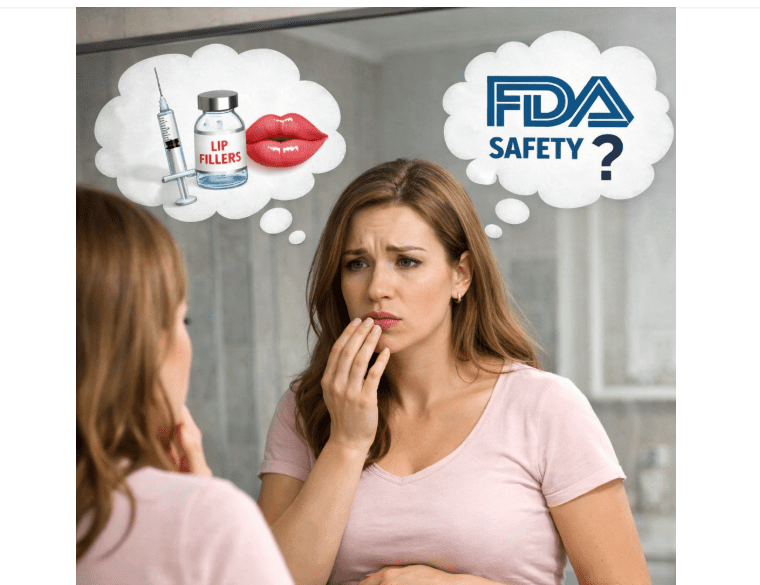
The Short Answer (Quick Clinical Overview)
No, you cannot and should not get lip fillers while pregnant. Medical professionals, board-certified dermatologists, and the FDA strictly advise against cosmetic injectable treatments during pregnancy. The primary reasons include:
- Zero Clinical Safety Data: There are no ethical clinical trials proving that Hyaluronic Acid (HA) fillers are safe for a developing fetus.
- Lidocaine Absorption: Most premium dermal fillers contain lidocaine (a numbing agent), which can cross the placental barrier.
- Unpredictable Immune Responses: Pregnancy alters your immune system, drastically increasing the risk of allergic reactions, severe edema (swelling), and granulomas.
Key Takeaways: Lip Filler and Pregnancy
- Strictly Not Recommended: The FDA and ACOG strongly advise against receiving dermal fillers during pregnancy due to a lack of clinical safety data (Category C).
- Lidocaine Risks: Over 90% of modern lip fillers contain lidocaine, a numbing agent that can cross the placental barrier.
- If You Already Got It: Do not panic. Localized hyaluronic acid is highly unlikely to cause systemic harm to the fetus. Do not attempt to dissolve it with Hyaluronidase, as the dissolving enzyme is also unstudied in pregnant women. Inform your OB/GYN immediately.
Pregnancy Swelling vs. Filler Complications: How to Tell the Difference
| Symptom | Natural Pregnancy Edema | Lip Filler Reaction (Granuloma/Migration) |
| Appearance | Soft, pillowy, and evenly distributed across both lips. | Asymmetrical, hard lumps, or a “mustache” shadow above the lip line. |
| Timing | Builds gradually during the 2nd and 3rd trimesters. | Can happen immediately or months after injection due to immune shifts. |
| Pain Level | Painless, just feels full or slightly tight. | Tender to the touch, highly inflamed, or throbbing. |
| Treatment | Resolves naturally 4 to 6 weeks postpartum. | Requires medical observation; dissolving is usually postponed until postpartum. |
Can You Get Lip Filler While Pregnant? The Clinical Verdict on Lip Fillers and Pregnancy
Whether you are looking to maintain your previous volume or you are considering a subtle lip enhancements to boost confidence, the medical community’s stance is universal: cosmetic injectables must wait until after you deliver and finish breastfeeding.
Here is the deep clinical science behind why reputable injectors will refuse to treat pregnant patients.
1. The Ethical Dilemma and FDA Guidelines
The primary reason you cannot get lip fillers while pregnant comes down to a lack of clinical data. To label any medication or cosmetic procedure as “safe for pregnancy,” it must go through rigorous, multi-year FDA-approved clinical trials.
However, performing non-essential, cosmetic testing on pregnant women is considered highly unethical. Because researchers cannot purposely expose a developing fetus to potential teratogenic risks (substances that may cause birth defects), there is absolutely zero scientific data confirming that injecting cross-linked hyaluronic acid is harmless to your baby. In the medical world, a lack of safety data automatically translates to a strict “Do Not Treat” policy.
2. The Hidden Danger: Lidocaine Systemic Absorption
Many patients mistakenly believe that because Hyaluronic Acid (HA) is a naturally occurring sugar in the human body, injecting it should be perfectly safe. While HA itself might be biologically compatible, the filler syringe contains more than just HA gel.
Over 90% of premium modern fillers (such as Juvederm, Restylane, and Revanesse) are pre-formulated with Lidocaine, a local anesthetic used to numb the tissue from the inside out and minimize pain.
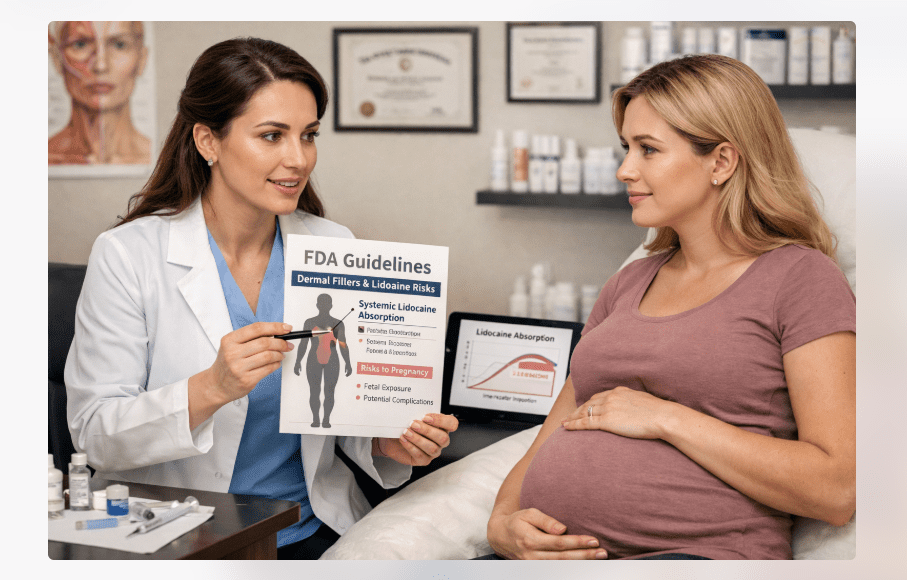
Clinical Fact: Lidocaine is scientifically proven to cross the placental barrier. While tiny amounts of lidocaine are sometimes used in medically necessary procedures during pregnancy, exposing your unborn baby to systemic lidocaine absorption for a purely elective, cosmetic lip enhancement is an unnecessary medical risk.
3. The Reversal Risk: Hyaluronidase Restrictions
Aesthetic treatments always carry a minor risk of complications. For instance, if an injector accidentally hits a blood vessel causing a vascular occlusion, or if you develop severe lumps inside the lip after filler that require emergency dissolving, the standard protocol is to inject an enzyme called Hyaluronidase.
Just like the fillers themselves, Hyaluronidase has not been tested for safety in pregnant women. If you experience a cosmetic emergency while pregnant, doctors are left with very limited, potentially unsafe options to reverse the damage, thereby putting both you and your baby in a compromised position.
The Panic Scenario: “I Got Filler Before I Knew I Was Pregnant!”
One of the most highly searched, panic-inducing questions in aesthetic clinics is: “What if I got lip fillers before I found out I was pregnant?”
If you are reading this and currently spiraling into anxiety because you had a cosmetic appointment during your first few weeks of pregnancy, take a deep breath. Do not panic. While medical professionals strictly refuse to inject pregnant women knowingly, having hyaluronic acid (HA) injected into your lips before a positive pregnancy test is generally not considered a medical emergency. Here is the clinical reassurance you need:
1. Hyaluronic Acid is Localized, Not Systemic
The primary concern with any medication or chemical during early pregnancy is whether it will travel through your bloodstream and reach the developing fetus (systemic absorption).
Unlike oral medications, cross-linked Hyaluronic Acid (HA) used in modern lip fillers is a heavy, viscous gel. Once it is injected into the submucosal layer of your lips, it stays strictly localized in that area. It does not freely float through your vascular system, nor does it possess the molecular ability to migrate down to your uterus or cross the placental barrier.
Because the HA is physically trapped in your lip tissue, the risk of it affecting your baby’s development in those early weeks is considered astronomically low by medical experts.
2. What About the Numbing Agent (Lidocaine)?
As we discussed earlier, the real concern is the Lidocaine mixed inside the filler syringe. While large, systemic doses of lidocaine are not recommended during pregnancy, the amount contained in a standard 1ml lip filler syringe is incredibly minute (usually around 0.3%).
In the medical world, small, localized doses of lidocaine are frequently used on pregnant women for necessary dental work or minor dermatological procedures. The tiny fraction of lidocaine used in your lips is processed by your liver very quickly and is highly unlikely to cause any teratogenic harm to an early embryo.
3. Your Action Plan (What to Do Next)
If you find yourself in this situation, the best course of action is transparency and observation, not intervention.
- Inform Your OB/GYN immediately: Be completely honest with your obstetrician. Tell them the exact date of your injection, the brand of filler used (e.g., Juvederm, Restylane), and the amount (e.g., 1ml or 0.5ml). They will simply note it in your medical file.
- Do Not Attempt to Dissolve It: This is crucial. If you notice swelling or minor lumps in your lips after the filler, do not rush back to the clinic to get it dissolved. Injecting Hyaluronidase (the dissolving enzyme) introduces an entirely new, unstudied chemical into your pregnant body. Unless you are experiencing a severe, limb-threatening vascular occlusion, doctors will advise you to leave the filler alone and let it degrade naturally over the next 9 to 12 months.
- Monitor for Delayed Reactions: Because your immune system is now shifting to protect the pregnancy, you might experience random, delayed swelling in your lips weeks after the initial injection. This is a normal immune response. Apply a cold compress and consult your doctor before taking any antihistamines.
The Biological Risks: What Actually Happens to Your Body?
Even if we step away from the FDA guidelines for a moment, you have to consider how drastically a woman’s body changes during pregnancy. The physiological shifts that happen to support a growing baby make the environment highly unfavorable for cosmetic injectables.
If you were to ignore medical advice and get lip filler while pregnant, the biological consequences could be severe. Here is exactly what happens to your body at a microscopic level:
Does Pregnancy Make Existing Lip Filler Dissolve Faster?
Yes. During pregnancy, a woman’s Basal Metabolic Rate (BMR) increases significantly to support the developing fetus. Because your metabolism is running in overdrive, your body breaks down cross-linked Hyaluronic Acid (HA) at a much faster rate. Combined with increased blood volume and shifting pharmacokinetics, many women notice that their pre-pregnancy lip filler fades several months earlier than expected.
1. Hemodynamic Changes and Extreme Bruising
During pregnancy, your body’s overall blood volume increases by up to 50% to support the developing fetus. This massive surge in blood flow leads to a condition known as Pregnancy-Induced Capillary Engorgement. Essentially, the tiny blood vessels (capillaries) in your face and lips become dilated, fragile, and packed with blood.
When a needle or cannula pierces this highly vascular, engorged tissue, the resulting trauma is far worse than it would be on a non-pregnant person. Instead of a minor mark, you are at a significantly higher risk of experiencing severe hematomas and extensive purple bruising after lip fillers. The bleeding is harder to control, and the bruise can take weeks to resolve due to the altered state of your cardiovascular system.
2. Extreme Edema and Unpredictable Healing
Pregnancy is synonymous with water retention. Your body naturally holds onto excess fluids (a condition medically termed as Gestational Edema). Now, consider the primary ingredient in dermal fillers: Hyaluronic Acid (HA).
HA is a highly hydrophilic (water-loving) molecule capable of holding 1,000 times its weight in water. If you inject a water-attracting gel into lips that are already prone to gestational fluid retention, the result is extreme, unmanageable swelling.
Under normal circumstances, you can accurately track your recovery using a standard lip filler healing process day by day timeline. However, during pregnancy, this timeline completely breaks down. The swelling might not subside for weeks, leaving you with painfully stretched tissue and highly distorted lip proportions that cannot be safely dissolved.
3. Maternal Immunosuppression and Granuloma Risks
To prevent your body from treating the growing baby as a “foreign invader,” your immune system undergoes a complex shift known as Maternal Immunomodulation (or immunosuppression). Your immune system essentially lowers its guard in some areas while becoming hyper-reactive in others.
Because your immune response is fundamentally altered and unpredictable, introducing a foreign substance—even the safest lip filler in 2026—can trigger a massive inflammatory cascade.
- Delayed-Onset Nodules: Your modified immune system may suddenly attack the HA gel weeks or months after the injection, forming painful, hard lumps (granulomas).
- Allergic Reactions: Even if you have had lip fillers multiple times before pregnancy with no issues, your pregnant body can develop a sudden, severe allergic reaction (anaphylaxis) to the exact same product.
Ultimately, the biological environment of a pregnant woman turns a standard, safe 15-minute cosmetic procedure into a highly unpredictable medical gamble.
The Phenomenon of “Pregnancy Lips” (Why You Might Not Even Need Filler!)
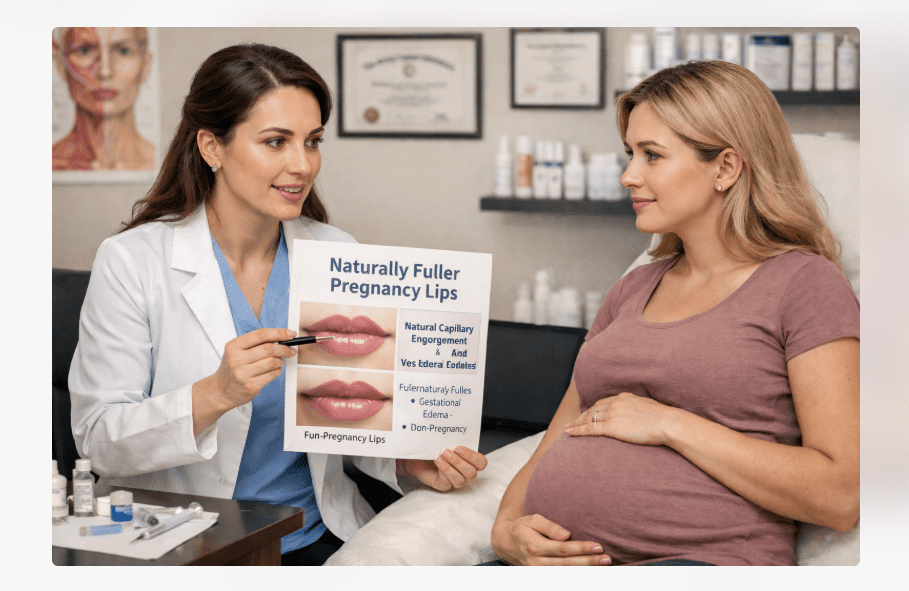
If you are feeling disappointed about having to cancel your aesthetic appointments for the next nine months, nature actually has a built-in backup plan for you. Have you ever noticed how many pregnant women seem to have naturally fuller, poutier lips, especially in their second and third trimesters?
This is not an illusion or a makeup trick. It is a documented biological occurrence commonly referred to as “Pregnancy Lips.” Before you stress over losing your volume, here is the clinical breakdown of why your body might give you a free, natural lip enhancement during pregnancy.
1. The Hormonal Plump: Estrogen and Vasodilation
During pregnancy, your body produces massive amounts of hormones, specifically Estrogen and Progesterone. These hormones are responsible for a medical process called vasodilation—the widening and relaxing of your blood vessels.
Because the skin on your lips is incredibly thin and packed with tiny capillaries, this systemic vasodilation causes increased blood flow (a state of hyperemia) directly to your mouth. This surge in circulation not only makes your lips look naturally rosier and flushed but also physically expands the tissue, giving them a visibly plumper appearance.
2. Gestational Edema (The Natural Filler)
As we early talk about it, pregnancy causes your body to retain a significant amount of water and fluids—a condition known as Gestational Edema.
While you might first notice this swelling in your ankles or fingers, your facial tissues, particularly the highly absorbent mucous membranes of your lips, also hold onto this extra fluid. This natural water retention creates a soft, pillowy volume that mimics the exact mechanism of Hyaluronic Acid (HA) fillers. In fact, many women notice that this fluid retention beautifully highlights their upper lip, creating a natural lift that looks almost identical to getting targeted lip filler for your Cupid’s bow.
3. Enjoy the Temporary “Glow Up”
The combination of increased blood volume (capillary engorgement) and natural fluid retention means you are essentially getting a slow-release, natural lip augmentation over the course of your pregnancy.
While this natural fullness will eventually subside a few weeks after you deliver (postpartum), it completely eliminates the need for cosmetic injectables while you are expecting. You get to enjoy the benefits of a fuller pout with zero needles, zero risk of vascular occlusion, and zero danger to your developing baby.
The Postpartum Timeline & Safe Alternatives
So, you have accepted that needles are off-limits for the next nine months. The next logical question is: when can you finally return to your aesthetic clinic to reclaim your volume? The timeline depends entirely on your postpartum journey, specifically whether or not you choose to breastfeed.
1. When Can You Get Lip Filler After Having a Baby?
Delivering your baby does not instantly give you the green light for cosmetic procedures. Your body needs time to stabilize its hormones, shed the excess blood volume, and regulate its immune system.
- If You Are Not Breastfeeding: Most board-certified dermatologists and plastic surgeons recommend waiting at least 6 weeks postpartum. This gives your gestational edema (swelling) enough time to completely subside, ensuring your injector can see your true baseline lip shape.
- If You Are Breastfeeding/Lactating: The medical guidelines remain strict—no fillers until you have completely finished weaning. Just as Lidocaine can cross the placental barrier, it can also be excreted into your breast milk. Exposing a newborn’s fragile digestive and nervous system to a systemic anesthetic, even in microscopic doses, is a risk no reputable medical professional will take.
When you are finally cleared, remember that your body has been through a massive transition. It is highly recommended to start slow. Instead of jumping back in with a full syringe, you might want to ask your injector how much is half a syringe of lip filler (0.5ml) to gently reintroduce the HA gel to your tissue and monitor how your postpartum immune system reacts.
2. Pregnancy-Safe Alternatives for Plumper Lips
Just because you cannot get injections doesn’t mean you have to sacrifice your skincare and beauty routine. Here are clinically safe, topical alternatives that mimic the effects of a subtle filler:
- Topical Hyaluronic Acid (HA) Serums: Since HA is safe when applied to the surface of the skin (it doesn’t enter the bloodstream), investing in a high-quality, medical-grade HA lip serum will draw moisture into your lips, mimicking the hydration aspect of an injectable filler.
- Peptide-Based Lip Treatments: Look for lip balms containing Oligo-peptides or Maxi-Lip™ technology. Peptides safely stimulate your natural collagen production over time, providing a gentle, long-term plumping effect without the use of needles.
- Cinnamon and Peppermint Oils: If you want an immediate, temporary pout for a maternity photoshoot, natural lip plumpers containing peppermint or cinnamon oil create a mild, safe irritation that causes vasodilation (increased blood flow) to the lips.
Frequently Asked Questions (FAQ)
Can I get lip filler if I am 4 weeks pregnant?
Can lip fillers cause a miscarriage?
Will my old lip filler migrate or swell during pregnancy?
Does Pregnancy Make Existing Lip Filler Dissolve Faster?
Can I get my lip filler dissolved while pregnant?
Medical Disclaimer The information provided in this article is for educational and informational purposes only and does not constitute medical advice. Lip augmentation via dermal fillers is a medical procedure. If you are pregnant, nursing, or planning to become pregnant, always consult with your OB/GYN and a board-certified dermatologist before considering any cosmetic treatments, topical serums, or aesthetic procedures.
Trusted Sources for This Guide:
- FDA.gov: Dermal Fillers (Soft Tissue Fillers) Safety Guidelines
- American College of Obstetricians and Gynecologists (ACOG): Skin Conditions During Pregnancy
- American Society of Plastic Surgeons: Safety of Cosmetic Procedures During Pregnancy

Sarah Mitchell is a dedicated aesthetic researcher with over a decade of experience analyzing cosmetic procedures. Obsessed with data and safety, she helps patients to provide real words and navigate the world of lip fillers with verified before and after results and honest cost breakdowns.
Pingback: The Ultimate Lip Filler Before and After Results Guide: 1ml vs 0.5ml & Real Recovery - Lip Filler Results