
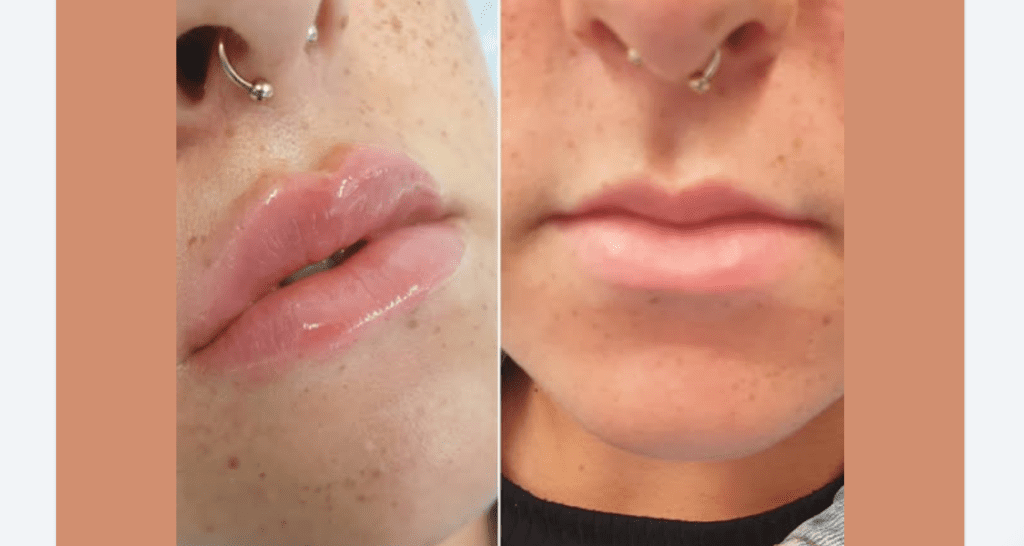
The Bottom Line (BLUF): If you have naturally thin lips, 1ml of FDA-approved hyaluronic acid (HA) filler is the medical standard for a safe, subtle, and highly realistic enhancement. Physically equivalent to just 1/5th of a teaspoon, 1ml provides hydration, defines the Vermillion border, and restores symmetry without risking the dreaded “overfilled” look.
What Does 1ml Actually Do to Thin Lips?
For patients stepping into an aesthetic clinic for the first time, seeing a realistic lip filler before and after transformation is crucial for setting expectations. When dealing with thin lips, a board-certified dermatologist or plastic surgeon doesn’t just “add volume”—they focus on structural architecture.
Here is exactly what 1ml achieves for thin lips:
- Subtle Tissue Expansion: Thin lips lack internal “space.” 1ml gently expands this tissue, adding noticeable but natural plumpness.
- Enhanced Definition (The Golden Ratio): In US facial aesthetics, the ideal lip proportion is the 1:1.6 Golden Ratio (where the bottom lip is slightly fuller than the top). 1ml allows the injector to perfectly balance your upper and lower lips to meet this mathematical standard of beauty.
- Deep Hydration: Premium HA fillers act like a sponge, drawing water into the lips. This smooths out fine lines and gives a glossy, hydrated finish even without makeup.
The Big Debate: 0.5ml vs. 1ml for Thin Lips
One of the most common questions beginners ask before their appointment is whether they should start with a half syringe. If you are highly cautious, you might be wondering exactly how much is half a syringe of lip filler (0.5ml) and if it’s enough to make a difference.
While 0.5ml is great for a microscopic touch-up, 1ml remains the “sweet spot” for naturally thin lips. Here is a clear breakdown to help you decide:
| Feature | 0.5ml (Half Syringe) | 1ml (Full Syringe) |
| Visual Impact | Barely noticeable; mostly adds hydration. | Visible but highly natural; improves structure. |
| Best Used For | Micro-adjustments or correcting slight asymmetry. | Building a new baseline volume for thin lips. |
| Longevity | Breaks down faster due to lower volume. | Lasts standard 6-12 months (metabolism dependent). |
| Cost Efficiency | Clinics often charge close to the full price of 1ml due to syringe opening protocols. | Best value for money in US med-spas. |
Why 1ml Won’t Give You “Duck Lips”
Let’s clear the biggest myth right now: 1ml will not give you “duck lips.” Unnatural, protruding side profiles happen when an injector forces 2ml or more into thin lips at once, or uses poor techniques that cause the gel to migrate past the lip border (Philtrum columns). When placed correctly using strategic micro-droplets, 1ml strictly lifts the tissue vertically, maintaining a perfectly flat and elegant side profile.
Understanding Your Anatomy: Why Are Your Lips Thin?
To achieve the most realistic 1ml lip filler before and after results, a board-certified injector must first analyze why your lips lack volume. Treating a 25-year-old is medically very different from treating a 50-year-old.
- Genetically Thin Lips (20s & 30s): If you were born with less structural tissue, the clinical goal is Tissue Expansion. Your injector will use a slightly firmer HA gel to build a completely new Vermillion border from scratch, ensuring the structure holds up against your facial muscle movements.
- Aging & Volume Loss (40s & 50s): If your lips used to be full but have thinned out, it is due to a natural drop in Collagen and Elastin. As we age, the upper lip tends to invert (turn inwards) and lengthen. The goal here is Structural Restoration. A softer HA gel is used to push the lip vertically back to its youthful position while simultaneously smoothing out perioral lines (smoker’s lines).
The Best FDA-Approved Fillers for Thin Lips (US Market)
Patients often ask experts what is the safest lip filler in 2026 for delicate, thin tissue. In the United States, medical professionals rely strictly on FDA-approved Hyaluronic Acid (HA) formulas. HA is a naturally occurring sugar molecule in our bodies that attracts up to 1,000 times its weight in water, providing unparalleled hydration.
For thin lips, your injector will likely select one of these top-tier US brands:
- Restylane Kysse: Specifically designed with XpresHAn Technology™, this filler moves flawlessly with your facial expressions. It is a top choice for thin lips because it offers volume without stiffness.
- Juvéderm Volbella XC: A very thin, ultra-smooth gel perfect for subtle enhancement and erasing vertical lip lines. It is ideal for patients who want a completely undetectable, “stealth” lip job.
- Juvéderm Ultra XC: Slightly thicker than Volbella, this is excellent for patients with thin lips who want a bit more pronounced plushness and horizontal spread.
- Revanesse Versa: Known for causing significantly less post-procedure swelling (edema), making it a fantastic option for first-timers anxious about the initial recovery phase.
(Note: The “XC” in Juvéderm products means they are pre-mixed with Lidocaine, a local anesthetic that makes the injection process virtually painless.)
Botox Lip Flip vs. 1ml Filler: The Ultimate Dilemma
If you have a thin upper lip, you have likely come across the “Botox Lip Flip” trend online. Many patients in the US are torn between getting a Lip Flip or going straight for a 1ml HA filler. Understanding the difference is key to getting the right aesthetic outcome.
- The Botox Lip Flip: This involves injecting a few units of neuromodulator (like Botox or Dysport) into the orbicularis oris muscle just above the upper lip. It relaxes the muscle, allowing the top lip to gently “flip” outward, making it look slightly fuller when you smile. However, it adds zero actual volume and only lasts about 6 to 8 weeks.
- 1ml HA Filler: This actually physically adds volume, hydration, and long-lasting structure (6 to 12 months) to both the upper and lower lips.
The Expert Verdict: If your lips are incredibly thin and completely disappear when you smile, a lip flip alone will not give you the plumpness you desire. Instead, top US injectors often recommend a Hybrid Approach: combining a Lip Flip to roll the lip outward with a 1ml filler to provide actual structural volume. Consulting a comprehensive lip filler shape guide with your provider will help map out the exact strategy for your unique facial anatomy.
Visualizing the 1ml Before and After: Real Case Scenarios
When you look at clinical before-and-after portfolios in top US med-spas, you will notice that 1ml of HA filler behaves differently depending on the patient’s starting anatomy. Instead of just looking at the overall size, here is what you should actually look for in those photos:
- Case Scenario A (The M-Shaped Thin Lip): The patient has a very thin upper lip with a flat center. The “After” photo doesn’t just show a bigger lip; it shows a meticulously defined lip filler for cupid’s bow using micro-droplet techniques. The classic 60/40 ratio (0.6ml in the bottom lip, 0.4ml in the top) prevents the upper lip from looking heavy or protruding.
- Case Scenario B (The Asymmetrical Thin Lip): One side of the patient’s lip naturally pulls higher or thinner. Here, 1ml is used structurally. The “After” reveals a balanced, symmetrical smile where the Oral Commissures (corners of the mouth) are slightly upturned to eliminate a resting “sad” face.
- Case Scenario C (The Over-the-Top Trend): You might see heavy, flat, and extremely tall lips online. These are typically the result of multiple syringes or different style Russian lip fillers, a technique that heavily focuses on vertical height. For naturally thin lips, top US injectors usually advise against the Russian technique for the very first session, as it significantly increases the risk of filler migration into the Philtrum columns.
The Technique: Needle vs. Cannula for Thin Lips
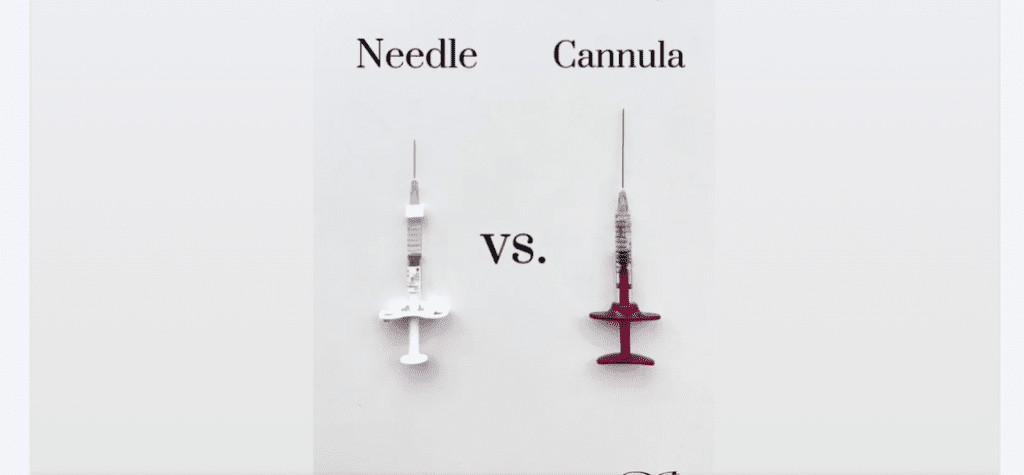
The tool your injector uses is just as important as the FDA-approved filler itself. Clinics typically use either a traditional sharp needle or a blunt-tipped micro-cannula.
| Feature | Traditional Sharp Needle | Blunt-Tipped Cannula |
| Precision | High. Perfect for creating sharp, crisp definition in the Vermillion border. | Moderate. Better for adding smooth, even volume across the lip body. |
| Safety Profile | Requires deep anatomical expertise to avoid piercing a blood vessel. | High. The blunt tip glides past blood vessels, greatly reducing the risk of a Vascular Occlusion. |
| Best For Thin Lips? | Ideal for the structural definition that flat, thin lips desperately need. | Ideal for patients prone to severe swelling (Edema) or bruising. |
In advanced US clinics, a board-certified provider often uses a Hybrid Approach: employing a cannula to lay down a smooth foundation of volume in the body of the lip, and switching to a fine needle to carve out the crisp borders.
The Pain Factor: Does 1ml Lip Filler Hurt?
A major concern for beginners is the pain associated with the procedure. Because the lips are packed with sensitive nerve endings, the idea of needles can be intimidating. However, modern aesthetic medicine has made the process incredibly comfortable.
- Medical-Grade Topical Numbing: Before any needle touches your skin, a prescription-strength topical numbing cream (often a BLT compound of Benzocaine, Lidocaine, and Tetracaine) is applied for 15 to 30 minutes.
- Lidocaine-Infused Fillers: As mentioned earlier, premium HA fillers (like Juvéderm Ultra XC) are pre-formulated with Lidocaine. This means that as the filler enters your lips, it instantly numbs the tissue from the inside out.
- The Sensation: Most patients describe the feeling not as pain, but as a slight “pinching” or a sensation of pressure as the gel is deposited into the tissue space.
The Science of Swelling: Why Your ‘Immediate’ Result Isn’t Final
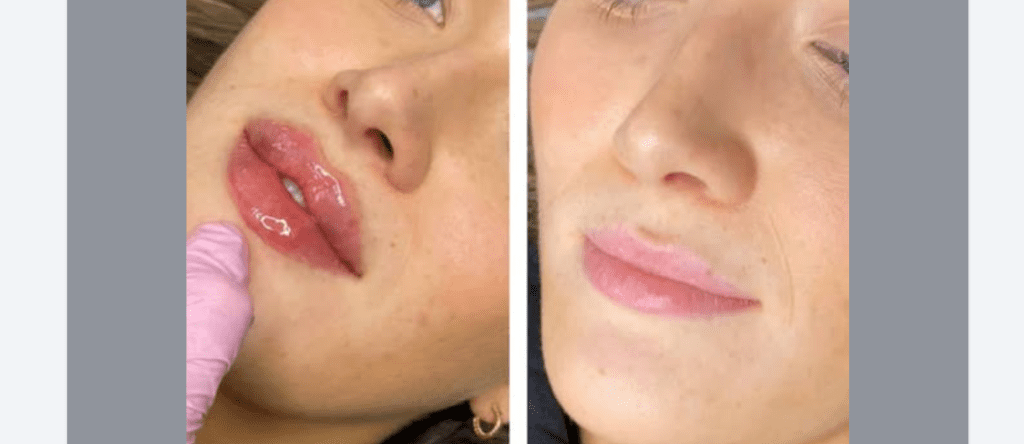
One of the biggest mistakes patients with thin lips make is judging their results on the very first day. When you look in the mirror immediately after the procedure, you are not looking at the actual volume of the 1ml filler. You are looking at the filler combined with Edema (acute tissue swelling) and localized inflammation.
Because thin lips have tighter skin and less internal space, the physical introduction of a needle creates micro-trauma. In response, your body rushes blood and healing fluids to the area. Furthermore, because Hyaluronic Acid (HA) is a hydrophilic (water-loving) molecule, it aggressively pulls in surrounding water during the first 48 hours. This combined effect makes the lips appear up to 30% larger than the final, settled outcome.
The Realistic 1ml Lip Filler Timeline (Day 1 to Day 14)
Understanding this science is crucial for managing your expectations. To give you a perfectly accurate picture of what to expect, let’s break down the timeline. (For a more exhaustive look, you can track the complete lip filler healing process day by day 2026):
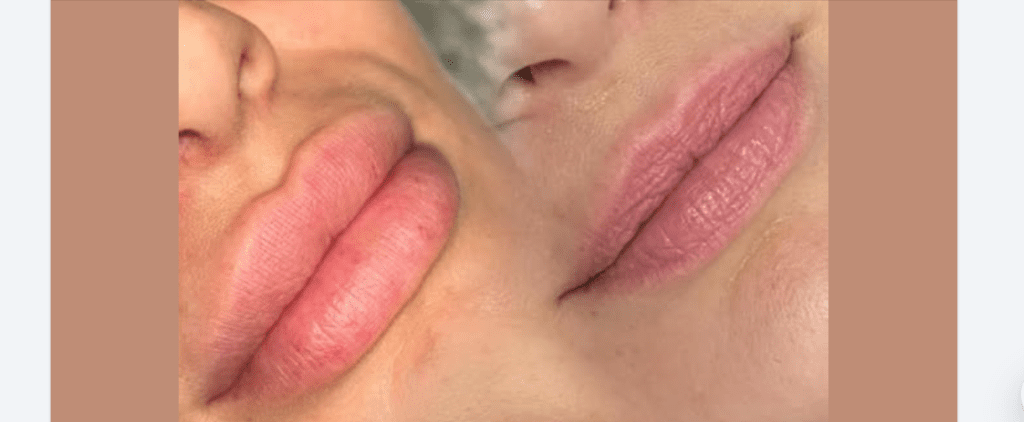
- Day 1: The Swell and Pout (Peak Edema): Immediately after the injections, your lips will feel tight, tender, and significantly larger. The Vermillion border may look slightly raised. Note: Do not panic—this is not your final size!
- Day 2 to Day 4: Bruising and Integration: As the swelling begins to stabilize, you may notice dark spots or purple bruising after lip fillers appearing, especially near the injection sites due to the high vascularity of the lips. The lips might also feel slightly uneven, and you might notice tiny lumps in lips after filler as the HA gel integrates with your natural Collagen and Elastin fibers. This is entirely normal and usually resolves itself.
- Day 5 to Day 7: The “Deflation” Panic: By the end of the first week, the majority of the fluid retention subsides. Many patients experience “filler blindness,” mistakenly believing that the filler has completely disappeared. In reality, the swelling has just vanished, leaving the actual 1ml volume behind.
- Day 14: The Final, Realistic Result: At the two-week mark, the filler has fully settled. Any minor lumps will have smoothed out. This is when you see the final, beautifully hydrated, and structurally balanced result.
Crucial Aftercare to Protect Your 1ml Results
Because 1ml is a subtle amount, you want to ensure it stays exactly where your board-certified injector placed it, especially during the critical first 72 hours. Proper aftercare prevents the filler from migrating and reduces the risk of complications.
- Avoid Pressure & Sleep Position: The HA gel remains slightly moldable for the first few days. A common question patients ask is can I sleep on my side after lip filler? It is highly recommended to sleep strictly on your back with your head elevated on an extra pillow for at least 3 nights to prevent asymmetrical pressure on your lips.
- Skip the Gym: Avoid heavy lifting and intense cardio for 48 hours. Raising your heart rate will increase blood flow to your face, worsening the swelling and prolonging the healing timeline.
- Pre-Care Warning (Blood Thinners): To minimize the Day 2 bruising phase, avoid NSAIDs (like Ibuprofen, Aspirin), Fish Oil, and Vitamin E at least 48 hours before your appointment. Taking Arnica Montana tablets can also significantly reduce post-procedure discoloration.
- Monitor for Rare Risks: While standard bruising is normal, extreme, spreading pain combined with white blanching on the skin could be a sign of a Vascular Occlusion (when filler accidentally enters a blood vessel). Though incredibly rare when performed by a medical professional, always contact your clinic if you experience severe, abnormal symptoms.
How Long Does 1ml Lip Filler Last in Thin Lips?
When you finally achieve your ideal, realistic 1ml lip filler before and after thin lips transformation, the next logical question is: “How long will this last?” On average, a premium, FDA-approved Hyaluronic Acid (HA) filler injected into the lips will last anywhere from 6 to 12 months. However, because thin lips naturally have less tissue to hold the gel, longevity depends on a few unique biological and lifestyle factors:
- Metabolic Degradation: Your body naturally produces an enzyme (endogenous hyaluronidase) that slowly breaks down the injected HA over time. If you have a fast metabolism, or if you are highly active (frequent intense workouts), your body may metabolize the filler closer to the 6-month mark.
- Mechanical Movement: The mouth is a highly active area. Talking, chewing, smiling, and sipping all create constant muscle movement around the Oral Commissures. This constant friction causes the filler to break down slightly faster than filler placed in non-moving areas (like the cheeks).
- The Brand Used: Thicker, highly cross-linked HA fillers are specifically formulated to resist breakdown and might last closer to a full year, whereas softer, highly flexible fillers might metabolize quicker but offer a softer feel.
The Secret to Long-Term Volume: The Layering Technique
If you have very thin lips, you cannot force them to stretch overnight. Aesthetic experts in the US use a medical concept called Tissue Expansion.
During your first appointment, 1ml is used to gently stretch the tight lip tissue and establish a new Baseline Volume. After 6 to 9 months, as the original 1ml begins to slowly degrade, you return for a maintenance appointment. Because the tissue has now safely expanded, your injector can add another 0.5ml or 1ml. This Layering Technique is the absolute safest way to build permanent, structural volume over time without ever risking migration or ending up with a fake, overfilled appearance.
The Ultimate Safety Net: What If I Hate It?
Building realistic expectations also means knowing your exit strategy. What if the swelling subsides and you simply don’t like how your new lips look?
This is where the magic of Hyaluronic Acid (HA) truly shines. Unlike permanent silicone injections from the early 2000s, modern HA fillers are 100% reversible. If you experience severe migration, unevenness, or simply regret the procedure, a medical professional can inject an enzyme called Hyaluronidase. Within 24 to 48 hours, it completely dissolves the HA filler, returning your lips to their exact original state.
Special Considerations: Pregnancy and Male Aesthetics
Safety is paramount in aesthetic medicine. For instance, many expecting mothers wonder can you get lip filler while pregnant? The strict medical answer in the US is no. FDA guidelines advise against dermal fillers during pregnancy and breastfeeding due to the lack of clinical safety trials on fetuses. It is always best to wait until after you have finished nursing.
Additionally, thin lips are not just a female concern. The demand for male lip enhancement has skyrocketed. However, the anatomical approach is different. A realistic lip filler men before and after focuses on straightening the lip profile and adding subtle structural width, completely avoiding the exaggerated “Cupid’s bow” lift to maintain a masculine facial harmony.
The Cost: Budgeting for Your 1ml Treatment in the US
Pricing is a massive factor. Generally, the cost of a premium 1ml HA filler in the United States ranges from $500 to $800+, depending on the expertise of your board-certified injector, your geographic location (Beverly Hills clinics will naturally charge more than Midwest med-spas), and the specific brand used.
Expert Advice: Never bargain-hunt when it comes to your face. Discounted fillers often mean diluted products or inexperienced injectors, which exponentially increases the risk of severe complications.
Conclusion: Is 1ml the Right Choice for Your Thin Lips?
If you have spent hours looking at realistic 1ml lip filler before and after thin lips photos, the takeaway is clear: 1ml is the industry-standard “sweet spot” for beginners. It provides exactly what naturally thin lips need—subtle hydration, a defined Vermillion border, and a beautifully balanced profile—without crossing the line into looking “fake.”
Trust the healing timeline, follow your aftercare instructions, and wait for that 14-day mark. By choosing a highly qualified, board-certified injector, your dream of having naturally plump, beautifully structured lips is completely achievable.
Frequently Asked Questions (FAQ)
Does 1ml of lip filler look natural on thin lips? Yes, absolutely. 1ml is physically equivalent to 1/5th of a teaspoon. When injected using precise micro-droplet techniques by a medical professional, it perfectly enhances the natural anatomy of thin lips, adding subtle volume rather than a fake, bulky appearance.
Can I get “duck lips” from just 1ml of filler? No. “Duck lips” occur due to overfilling (injecting 2ml+ at once) or poor technique that causes the filler to migrate into the Philtrum columns. 1ml placed correctly will never cause this issue.
What is the best type of filler for thin lips? The safest and most effective option is an FDA-approved Hyaluronic Acid (HA) filler (such as Juvéderm Volbella or Restylane Kysse). HA is naturally found in the body, provides excellent hydration, and is fully reversible.
How long does the swelling last after 1ml lip filler? Peak swelling (Edema) occurs within the first 24 to 72 hours. While the majority of the swelling and bruising will subside within the first week, it takes a full 14 days for the HA gel to completely integrate with your natural tissue.
Medical Disclaimer: The information provided in this article is for educational and informational purposes only and does not constitute medical advice. Lip augmentation via dermal fillers is a medical procedure that carries potential risks, including bruising, swelling, and rare complications like vascular occlusion. Always consult with a board-certified dermatologist or plastic surgeon to determine if 1ml lip filler is the right and safe choice for your unique anatomy.
Trusted Sources & Medical References
To ensure the highest standard of medical accuracy, safety, and transparency, the clinical facts and aesthetic guidelines in this article are cross-referenced with the following authoritative medical institutions:
- U.S. Food and Drug Administration (FDA) – FDA-Approved Dermal Fillers
- Why we cited this: To verify the safety profiles and official approval statuses of the Hyaluronic Acid (HA) filler brands mentioned, such as Juvéderm® and Restylane®.
- American Society of Plastic Surgeons (ASPS) – Dermal Fillers Overview & Safety
- Why we cited this: To provide readers with the most accurate, up-to-date US clinical standards regarding the lip filler procedure, realistic expectations, and national cost averages.
- American Academy of Dermatology (AAD) – Dermal Fillers: What You Should Know
- Why we cited this: To back up our dermatological advice on pre-care (avoiding blood thinners), post-procedure aftercare, and the scientific management of side effects like Edema (swelling) and bruising.
- National Institutes of Health (NIH / PubMed) – Hyaluronic Acid Fillers: Science and Clinical Uses
- Why we cited this: To ground our explanations of “Tissue Expansion” and the hydrophilic (water-attracting) nature of HA fillers in peer-reviewed, academic medical literature.

Sarah Mitchell is a dedicated aesthetic researcher with over a decade of experience analyzing cosmetic procedures. Obsessed with data and safety, she helps patients to provide real words and navigate the world of lip fillers with verified before and after results and honest cost breakdowns.
Pingback: Half Syringe Lip Filler Before and After: 2026 Real Results, Cost & What to Expect - Lip Filler Results
Pingback: Versa Lip Filler Before And After (2026) - Lip Filler Results